Thermal damage, solvent residue and unstable aroma reduce product value.
Food, aroma, cosmetics and nutraceutical ingredients
Natural plant extraction
Low-temperature SC-CO2 extraction preserves sensitive ingredients while process data supports batch repeatability.
40 sourcesSource IDs: S0032, S0071, S0097, S0100, S0029, S0030 +34Public claim boundary
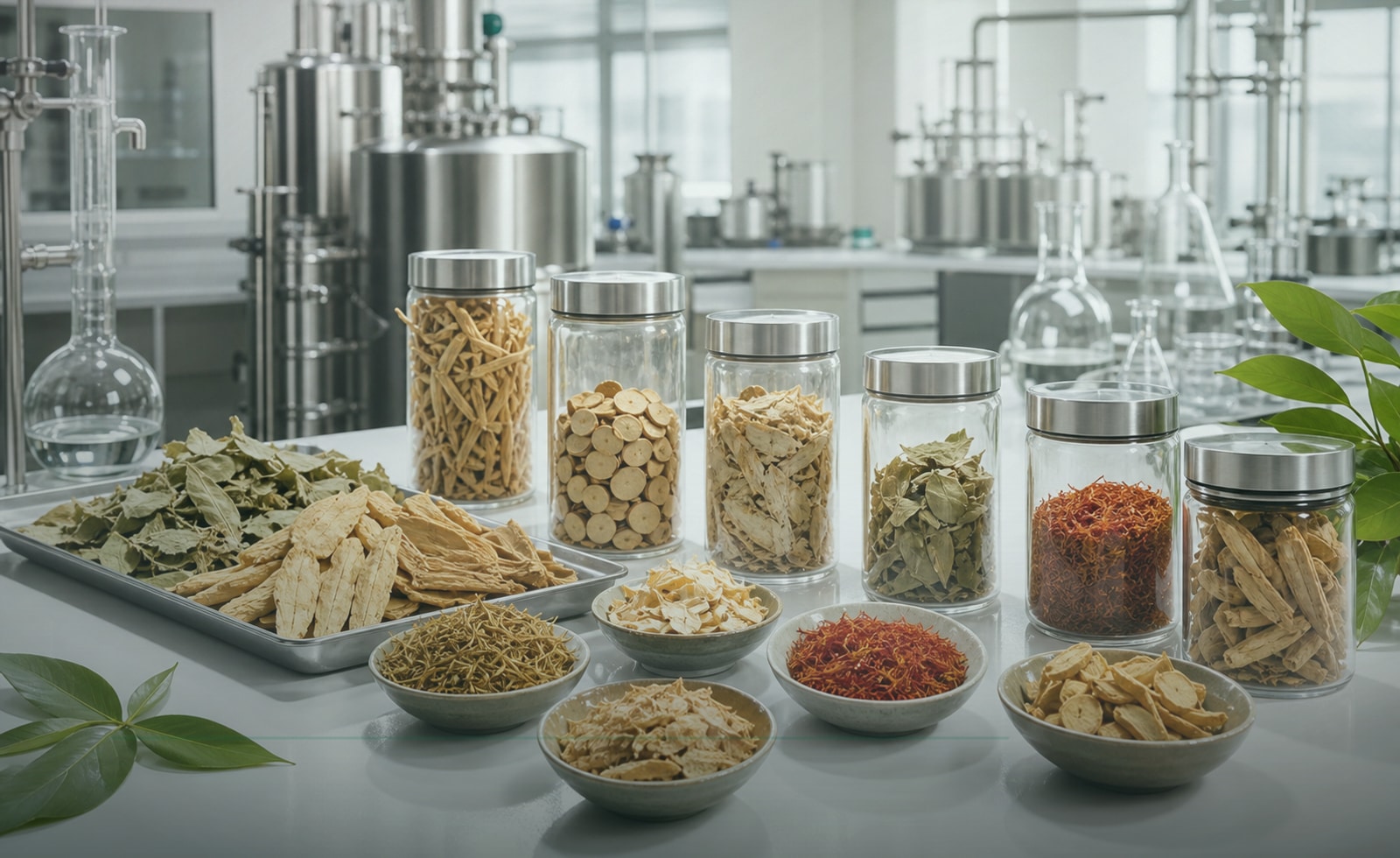
Application planning
Application validation path
Food, aroma, cosmetics and nutraceutical ingredients
Low-temperature SC-CO2 extraction preserves sensitive ingredients while process data supports batch repeatability.
- Material state and pre-treatment
- Target ingredient or product boundary
- Sample trial and acceptance criteria
- Claim review before market copy
Supercritical CO2 extraction equipment / 29 L parallel intelligent production line
40 sourcesCapability
Natural plant extraction
Thermal damage, solvent residue and unstable aroma reduce product value. Public claim boundary
Food, aroma, cosmetics and nutraceutical ingredients
- Thermal damage, solvent residue and unstable aroma reduce product value.
- Botanical oils
- Essential oils
- Chili and pepper
- Pomegranate seed
- Multi-material trials
Get a process plan
- Low-temperature SC-CO2 extraction preserves sensitive ingredients while process data supports batch repeatability.
- Material review and pre-treatment boundary
- Lab or pilot extraction window
- Separation fraction and residue review
- Equipment sizing and utility plan
- Operator training and remote recipe support
- Build a material screening matrix
Best fit
- Raw material moisture
- Target extract and solvent boundary
- Batch capacity
- Separation and collection method
- Number of materials
- Recipe switching frequency
- Pilot batch cadence
From idea to product launch
- Equipment supply
- Process development
- Pilot production support
- Remote diagnostics
- Joint commercialization route
- Pilot line supply
Damask rose
- Essential oil and aroma component development / Process evaluation for fresh high-moisture flowers and sensitive aroma.
40 sources
Public claim boundary
S0032, S0071, S0097, S0100, S0029, S0030 +34Commercial system
From material route to market-ready project
This application is planned as one chain: material validation, equipment fit, pilot batches, claim review and partner launch work.
Route anchored to equipment, process and source IDsMaterial intake
Food, aroma, cosmetics and nutraceutical ingredients / Botanical oils / Essential oils
Process window
Low-temperature SC-CO2 extraction preserves sensitive ingredients while process data supports batch repeatability. / Material review and pre-treatment boundary
Equipment fit
Supercritical CO2 extraction equipment / 29 L parallel intelligent production line
Pilot batch
Equipment supply / Process development
Claim review
Public claim boundary
Node launch
Joint commercialization / Regional node partnership
Send a process brief
- Raw material moisture
- Target extract and solvent boundary
- Batch capacity
- Separation and collection method
- Number of materials
Process path
- Low-temperature SC-CO2 extraction preserves sensitive ingredients while process data supports batch repeatability.
- Material review and pre-treatment boundary
- Lab or pilot extraction window
- Separation fraction and residue review
- Equipment sizing and utility plan
- Equipment supply
- Process development
40 sources
Public claim boundary
S0032, S0071, S0097, S0100, S0029, S0030 +34Claim-bounded cases
- Damask rose: Essential oil and aroma component development
From idea to product launch
- Joint commercialization: Bring raw material, process, packaging and sales assets into one project path.
- Regional node partnership: Build shared extraction capacity around local crops and industrial partners.
- Remote operations: Connect batch records, alarms and diagnostics to keep process knowledge reusable.
Natural plant extraction
Thermal damage, solvent residue and unstable aroma reduce product value.
Route anchored to equipment, process and source IDsRecommended equipment
Process path
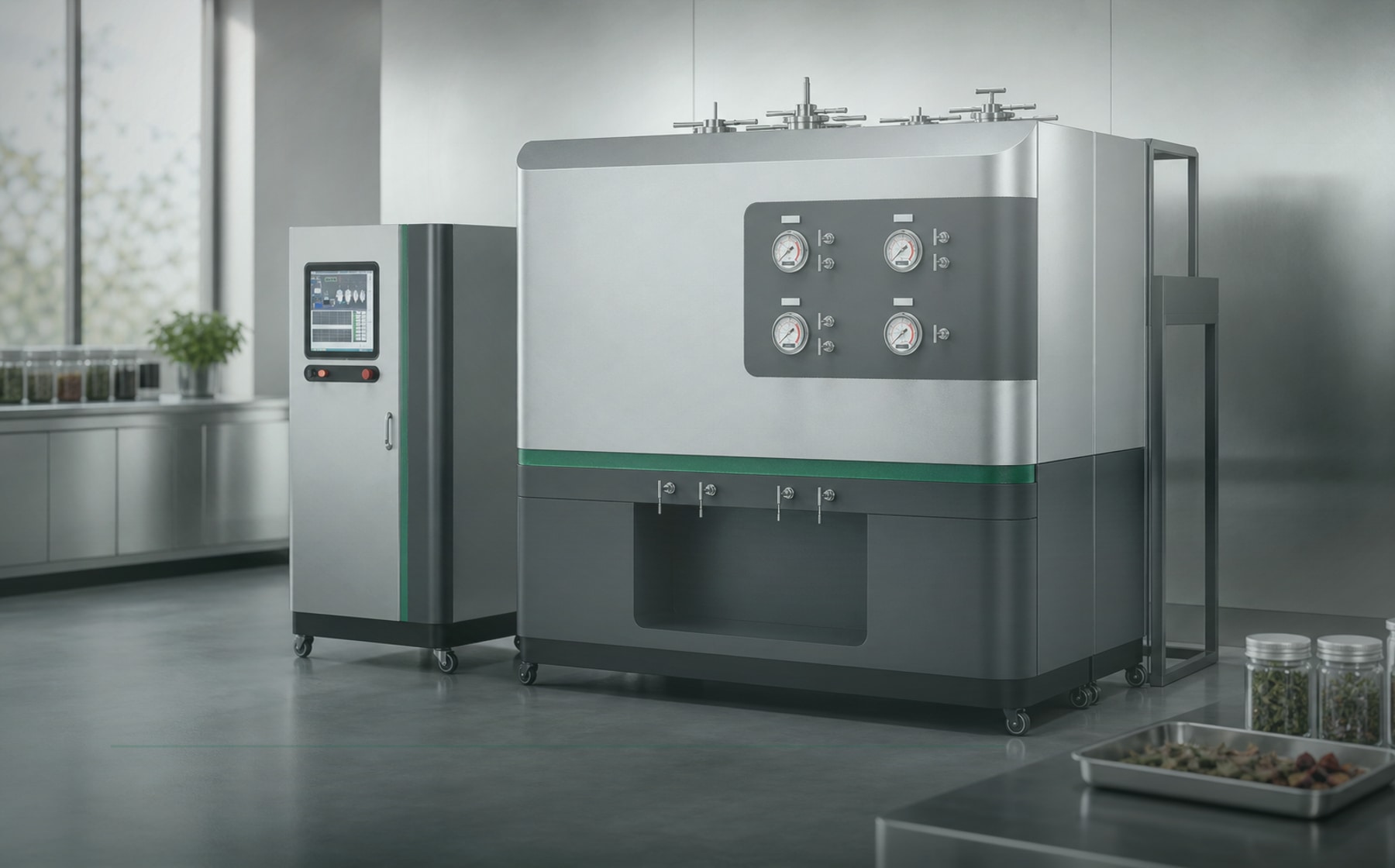
SC-CO2 extraction
Supercritical CO2 extraction equipment
Best for teams moving from lab samples to pilot and industrial production.
92 sources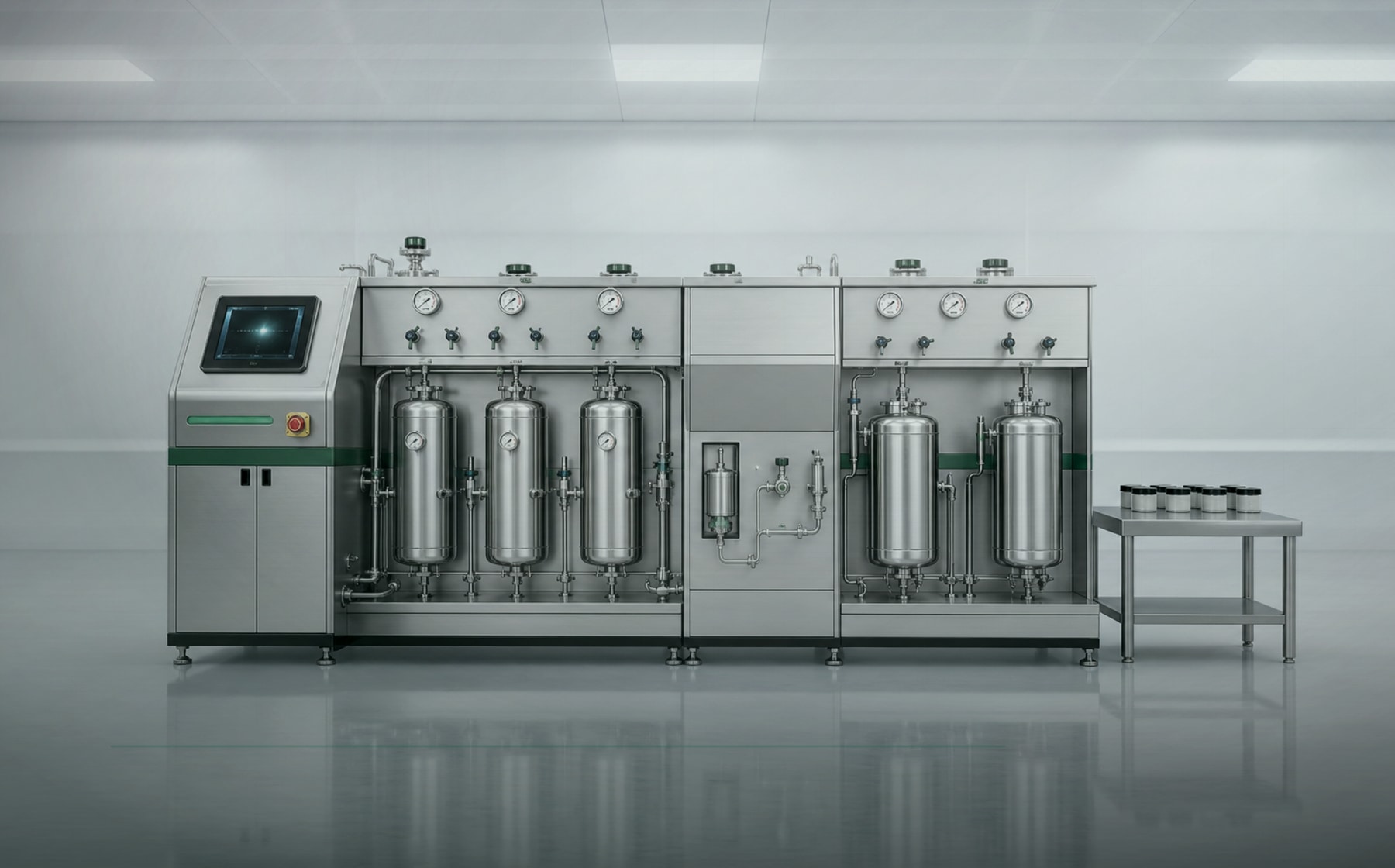
Parallel pilot line
29 L parallel intelligent production line
Best for growing manufacturers that need capacity without committing to one large system first.
46 sources